
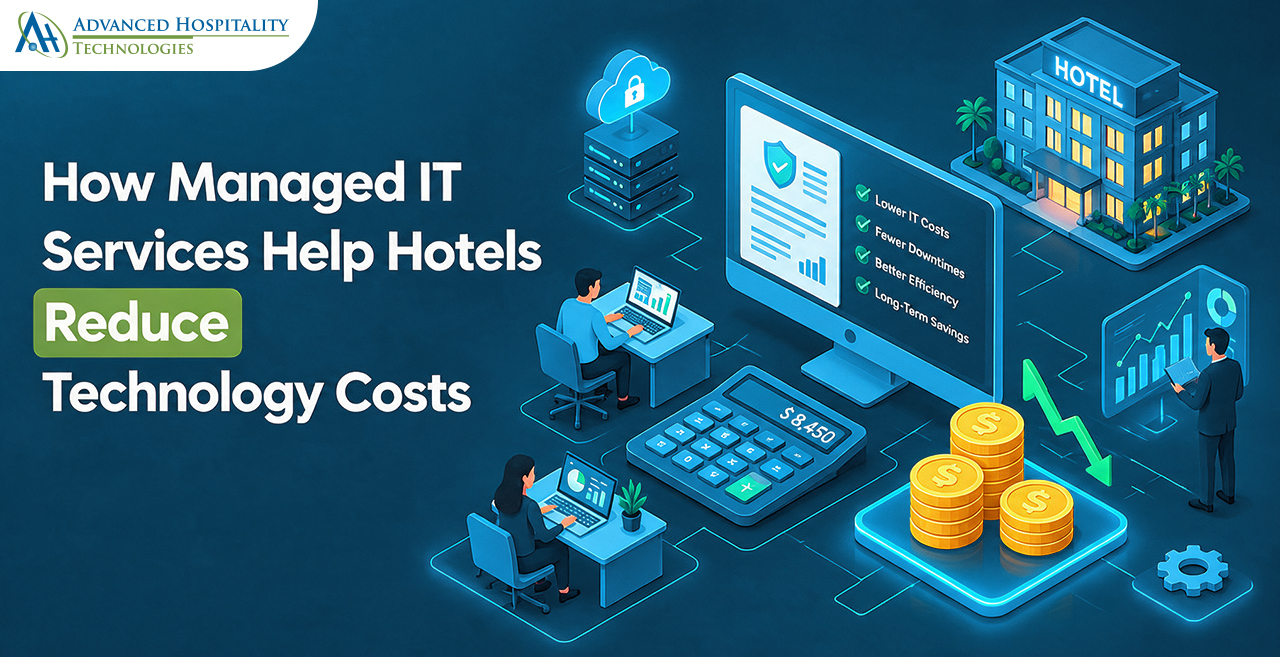
Technology is essential to hotel operations, but managing it can become expensive when there is no clear structure in place. Hotels rely on property management systems, guest WiFi, payment platforms, POS systems, security tools, back-office applications, phones, and staff devices to operate every day. When these systems are not properly monitored, maintained, or supported, costs can rise quickly.
For many hotels, the issue is not only how much they spend on technology. The bigger issue is how much they lose through downtime, repeated repairs, poor vendor coordination, outdated systems, staff inefficiency, and emergency troubleshooting.
This is why managed IT services for hotels have become a practical solution for owners and operators who want better technology performance without building a large internal IT department.
Why Hotel Technology Costs Increase Over Time
Hotel technology environments often grow in stages. A property may add new software, upgrade internet service, install new security systems, introduce mobile key access, or bring in guest messaging tools at different points over several years. If these systems are not managed under one strategy, costs can become difficult to control.
A hotel may end up paying multiple vendors, maintaining overlapping tools, relying on outdated hardware, or using staff time to solve technical problems. These hidden costs often do not appear as one clear line item, but they still affect the operating budget.
Good hotel IT management helps owners understand where technology spending is going and which systems are creating real value.
The Role of Managed IT Services in Hotels
Managed IT services give hotels access to ongoing technology oversight, support, monitoring, maintenance, and vendor coordination without needing to hire a full internal team.
Instead of waiting for systems to fail, a managed IT partner helps maintain the hotel’s technology environment proactively. This includes monitoring infrastructure, supporting staff systems, managing updates, responding to issues, coordinating with vendors, and identifying risks before they become expensive problems.
For many properties, this creates a more predictable cost structure. Instead of facing unexpected emergency expenses, hotels can plan support and maintenance more effectively.
Reducing Downtime and Emergency Repair Costs
Downtime is one of the most expensive technology problems in hospitality. If the PMS becomes unavailable, payment systems stop working, WiFi fails, or staff cannot access key systems, the impact is immediate.
Guests may experience delays. Employees may be forced to use manual workarounds. Managers may lose visibility into operations. In some cases, revenue can be directly affected.
With managed IT services for hotels, issues can often be detected and resolved before they disrupt operations. Proactive monitoring and regular maintenance help reduce the likelihood of major failures, while access to remote support allows problems to be addressed faster when they do occur.
This helps hotels avoid the higher costs that usually come with urgent, last-minute repairs.
Lowering the Need for a Large In-House IT Team
Not every hotel needs a full internal IT department. Smaller properties, boutique hotels, and even some mid-sized hotels may not have enough daily IT work to justify multiple full-time technical roles.
At the same time, relying only on non-technical staff or occasional vendor support can create delays and inconsistent service.
Outsourced hotel IT gives hotels access to experienced technical support without the fixed cost of building a large in-house team. This can help reduce payroll pressure while still giving the property access to the expertise it needs.
For hotel groups, a managed service model can also create more consistent standards across multiple properties.
Improving Vendor Coordination
Hotels often depend on several technology vendors. PMS providers, POS vendors, internet service providers, payment processors, phone system providers, security contractors, and software platforms may all be part of the technology environment.
When something goes wrong, the issue is not always with one system. A PMS issue may involve a network connection. A payment problem may involve a POS platform and processor. A guest WiFi complaint may involve hardware, bandwidth, or configuration.
A strong hotel technology partner can help coordinate these vendors and reduce the time spent chasing support across different providers.
Better coordination reduces delays, avoids repeated troubleshooting, and helps hotel teams get clearer answers when issues occur.
Extending the Life of Existing Technology
Replacing technology too early can waste money. Waiting too long can create higher maintenance costs and operational risk.
Managed IT services help hotels understand when systems should be repaired, upgraded, replaced, or retired. Through regular reviews and ongoing support, hotels can extend the useful life of existing systems while planning future investments more strategically.
This is especially important for owners who want to control costs without compromising performance, security, or guest experience.
Strengthening Security and Compliance
Cybersecurity problems can become extremely costly for hotels. A data breach, payment security issue, malware infection, or unauthorized access event can create financial, operational, and reputational damage.
Managed IT services support cost control by reducing these risks through regular updates, access control management, system monitoring, backup planning, and security reviews.
For hotels, security is not just a technical issue. It is a business protection measure. A proactive approach to cybersecurity can help prevent expensive disruptions and protect guest trust.
Supporting Staff Productivity
Technology issues often create hidden labor costs. Front desk teams may spend time dealing with login problems, printer issues, slow systems, WiFi complaints, or application errors. Managers may spend hours coordinating vendors or following up on unresolved tickets.
When staff spend time managing technology problems, they have less time to focus on guests and operations.
Managed IT services help reduce this burden by giving teams a clear support path and ensuring technical issues are handled by specialists. This improves productivity and allows hotel employees to stay focused on service delivery.
Turning Technology Into a Planned Operating Cost
One of the most valuable benefits of managed IT services is predictability.
Instead of dealing with technology as a series of unexpected emergencies, hotels can plan support, maintenance, monitoring, and improvements as part of a structured operating model.
This gives owners and operators better visibility into technology costs and helps them make more informed decisions about future upgrades.
A managed approach does not mean spending less on every technology item. It means spending more intelligently, reducing waste, and preventing avoidable costs.
How Advance Hospitality Technologies Helps Hotels Reduce IT Costs
Advance Hospitality Technologies supports hotels with managed IT services, remote technical support, hotel IT management, vendor coordination, infrastructure oversight, guest internet support, compliance support, and ongoing maintenance.
Rather than only fixing problems after they occur, AHT helps hotels build a more stable and cost-effective technology environment. This includes identifying recurring issues, improving support processes, reducing downtime, coordinating vendors, and helping owners make better technology decisions.
For hotels that need reliable IT oversight without the cost of a large internal team, AHT acts as a practical technology partner focused on performance, efficiency, and long-term value.
Conclusion
Hotel technology costs increase when systems are unmanaged, vendors are disconnected, support is reactive, and issues are allowed to repeat.
Managed IT services for hotels help reduce these costs by improving system reliability, lowering downtime, supporting staff productivity, strengthening security, and creating a more predictable operating model.
For owners and operators, the goal is not simply to spend less on technology. The goal is to make every technology investment work harder for the hotel.
FAQs
What are managed IT services for hotels?
Managed IT services for hotels provide ongoing technology support, monitoring, maintenance, vendor coordination, and system management for hotel operations. This helps properties keep critical systems running while reducing the need for a large internal IT team.
How can managed IT services reduce hotel technology costs?
Managed IT services reduce costs by preventing downtime, lowering emergency repair expenses, improving vendor coordination, extending the life of existing systems, and helping hotels plan technology investments more effectively.
Is outsourced hotel IT suitable for small hotels?
Yes. Outsourced hotel IT can be especially useful for small and mid-sized hotels that need reliable technical support but do not require a full in-house IT department.
What systems can a hotel IT management partner support?
A hotel IT management partner can support networks, guest WiFi, PMS access, POS systems, back-office computers, printers, security tools, user accounts, payment systems, and other operational technologies.
Why should hotels choose a hospitality-focused IT partner?
Hotels operate around the clock and depend on specialized systems. A hospitality-focused IT partner understands hotel operations, guest impact, vendor dependencies, and the need for fast support when technology issues affect service.